
Student Mobility- A Regional Challenge
In St. Louis City, 1 in 10 students will not finish the school year in the class where they started.
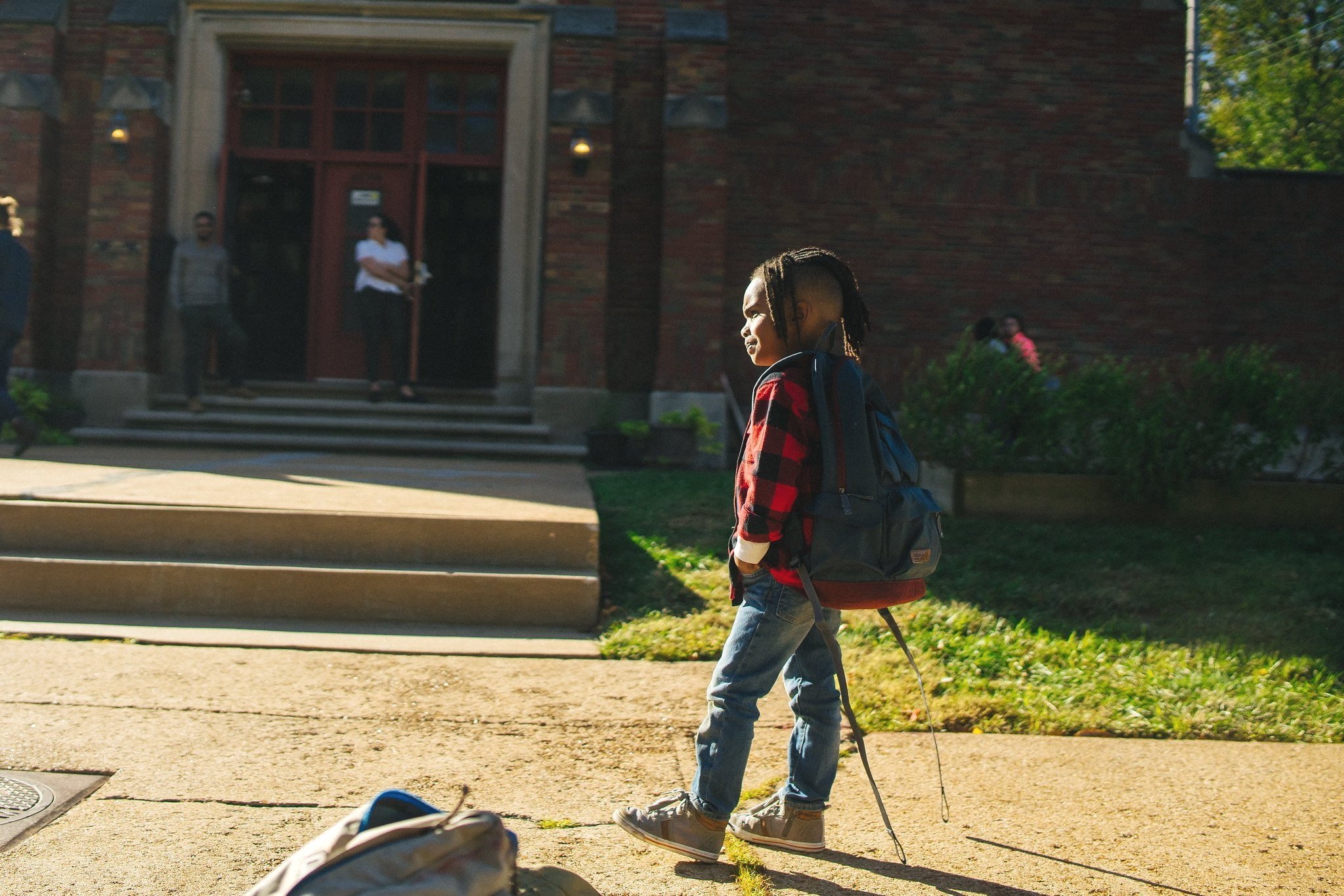
Many of St. Louis City students will change schools during the school year. More will show up at a different school next August. It takes a toll: on learning, on school community, on teachers, students, and families. Even one move before the natural end to a grade-level can reduce elementary school achievement in reading and math and increase high school dropout rates––with the most pronounced effect for students making three or more moves. Student mobility doesn’t only impact students, it also affects teachers and the classrooms in the schools they attend.
The seriousness of student mobility’s effects on student and school outcomes is especially relevant in St. Louis — a region sometimes described as ‘“hyper-mobile.”
Effectively addressing student mobility issues requires a nuanced understanding of its patterns and causes. Understanding who, how, when, and why students are likely to leave their schools can be helpful to target the development of resources and services.
The St. Louis Research Practice Partnership (now known as the STL RPP) is taking on this problem through a rigorous, research-based approach. School educators and university researchers have teamed up to learn more about student mobility to develop targeted strategies to reduce the unwanted impacts of churn.
“Our partnership and the subsequent findings of this study mark a significant step forward in our understanding of student mobility and its effects on educational outcomes. By leveraging these insights, we are committed to implementing evidence-based strategies that address the root causes of mobility and foster a more stable, supportive educational environment for all students.
”
Key Findings
-
National research shows:
Moving between schools frequently can cause students to fall behind by up to a year’s worth of learning.
Mobility affects the students who leave and the students who stay, negatively impacting all students’ ability to learn, classroom engagement, and connection to school
In Saint Louis City:
In the 2018-19 school year, a third of Saint Louis City’s school population was mobile on average.
Student mobility is high in Saint Louis City compared to surrounding counties and similar-sized cities, but the city’s mobility has been declining over the last 10 years.
-
Our analysis of data from 2007–2022 found the following characteristics of St. Louis City students made a student more or less likely to transfer:
Housing Stability: Students with unstable housing were significantly more likely than their stably housed peers to transfer. Also, the transfer odds were nearly two-times higher for students in shelters than housed students, higher than other unstable housing situations, such as doubling up or staying in a hotel.
Grade Level: Odds of transferring were lower for students in 1st through 8th grades. They increase in high school, peaking in 9th and 10th grades.
Race: Black students had a significantly higher chance of transferring schools than white students. Hispanic and Asian students were less likely than white students to move schools.
Neighborhood: Students living in neighborhoods with higher concentrations of Black residents were more likely to transfer.
Special Services: Students receiving special education services were slightly more likely to transfer, while English Language Learners were less likely to transfer.
-
Students move all over the St. Louis metropolitan region — not only within the city boundaries.
Transfer patterns follow historical racial segregation patterns in St. Louis.
By third grade, a little less than 60% of students who are performing below-basic will transfer schools at some point during their K-12 educational career.
Not all transfers had a negative impact. Students who moved to high-performing schools initially are set back academically but catch up with students in their new school by the second year. This is not true for students moving to lower proficiency schools.
Educators coined the term “invisible mobility” as a challenge masked by traditional student mobility rates: rapid transfer in and out when shopping for schools, chronic absenteeism, and transferring related to housing insecurity, though not formally designated.
Explore the Research

Student Mobility in St. Louis
Student Mobility in St. Louis: Educator Brief
Evan Rhinesmith, PhD; Saras Chung, PhD, MSW; Summer Jing; Ryan Delaney; Dorothy Rohde-Collins; and Rachel Matsumoto
January 2023
WHERE, WHEN, AND WHAT HAPPENS AFTER STUDENTS TRANSFER BEFORE YEAR-END? Educator Brief
Brief on original analysis conducted by Jason Jabbari, PhD; Takeshi Terada, PhD; Yung Chun, PhD; Richard Hall, PhD. Qualititative Analysis by Amber Jones, PhD and Andrew Butler, PhD. Brief written by Saras Chung, PhD, and Ryan Delaney.
January 2024
Who is Transferring? Educator Brief
Saras Chung, PhD, MSW; Jason Jabbari, PhD; Takeshi Terada, PhD; Yung Chun, PhD; Richard Hall, PhD; Ryan Delaney, Joe Heman, and Rachel Matsumoto.
September 2023
Continuing the Conversation:

Understanding Chronic Absenteeism
The STL RPP is continuing to explore what keeps kids out of their classrooms through a white paper, written by Drs. Miranda Ming, Kacy Shahid, Margaret Powers, and Juan Cortes. The newly released report, Reducing Chronic Absenteeism in St. Louis: A Multi-System Approach to Sustainable Improvement details structured interviews conducted with educators and students, providing valuable insights on the barriers to attendance and effective strategies employed in their districts